
Best Photography Locations in Manchester
Manchester is one of the UK’s most interesting cities to photograph, with a mixture of historic architecture, canals, modern skyscrapers, bridges, trams and constantly changing light.
As an award-winning Manchester photographer, I’ve spent years photographing the city in different conditions and at different times of day. From blue-hour cityscapes and reflections along the canals to night photography and light trails, there are plenty of opportunities to create striking images.
Whether you’re a beginner looking to improve your photography or an experienced photographer searching for new compositions, here are some of my favourite photography locations in Manchester.
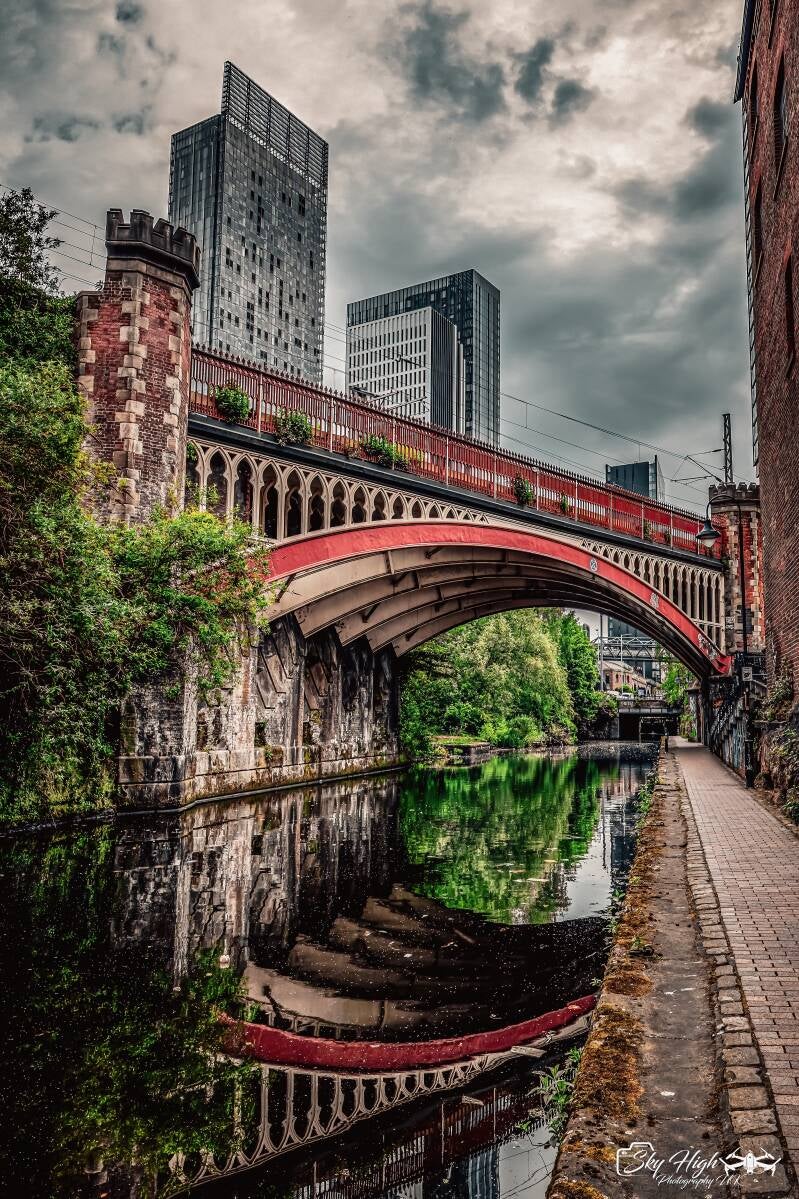
Castlefield
Castlefield is one of the best areas in Manchester for photography, particularly if you’re interested in cityscape and urban photography.
The canals, historic bridges and surrounding architecture provide plenty of opportunities for composition. Reflections in the water can work particularly well around blue hour, while the area takes on a completely different atmosphere after dark.
Castlefield is also a great place to practise long-exposure photography. You can experiment with reflections, movement and light while using the surrounding buildings and bridges to create strong leading lines.
For night photography, the combination of canal reflections, city lights and Manchester’s skyline makes Castlefield one of my favourite areas to photograph.
Photography tip: Try arriving before sunset so you can photograph the changing light from golden hour through to blue hour and into the evening.
St Peter’s Square
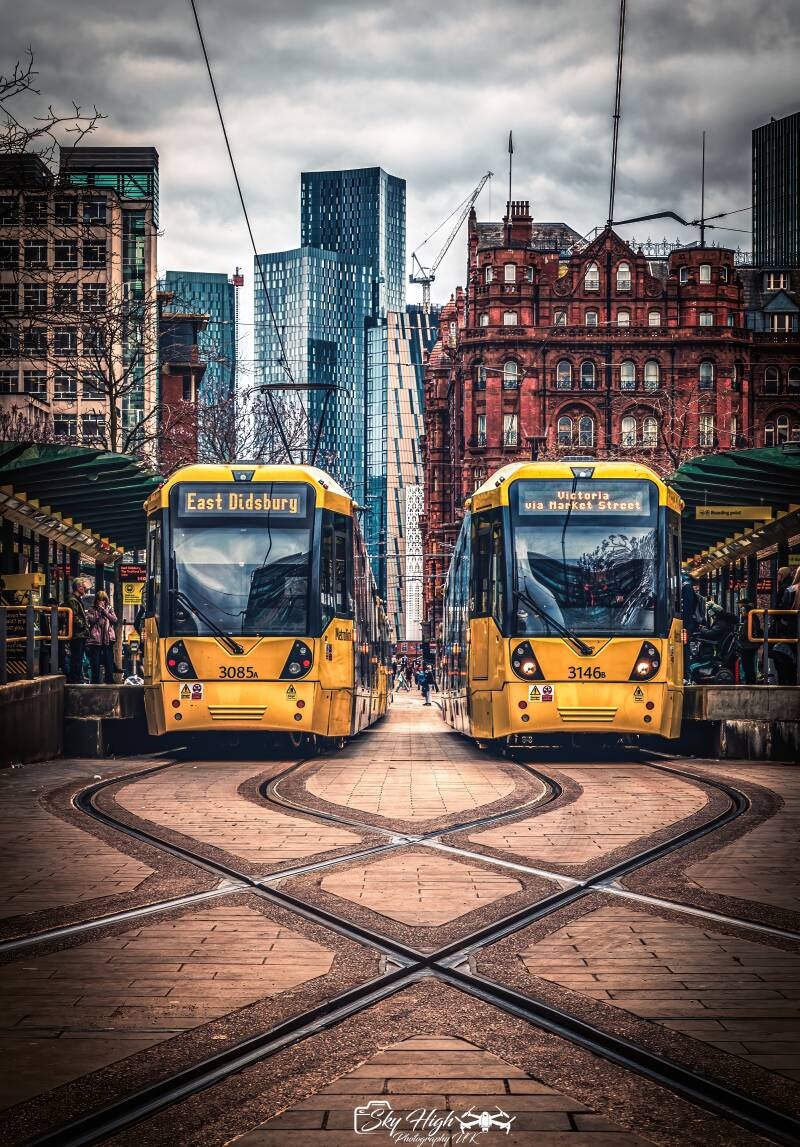
St Peter’s Square is another excellent location for Manchester cityscape photography.
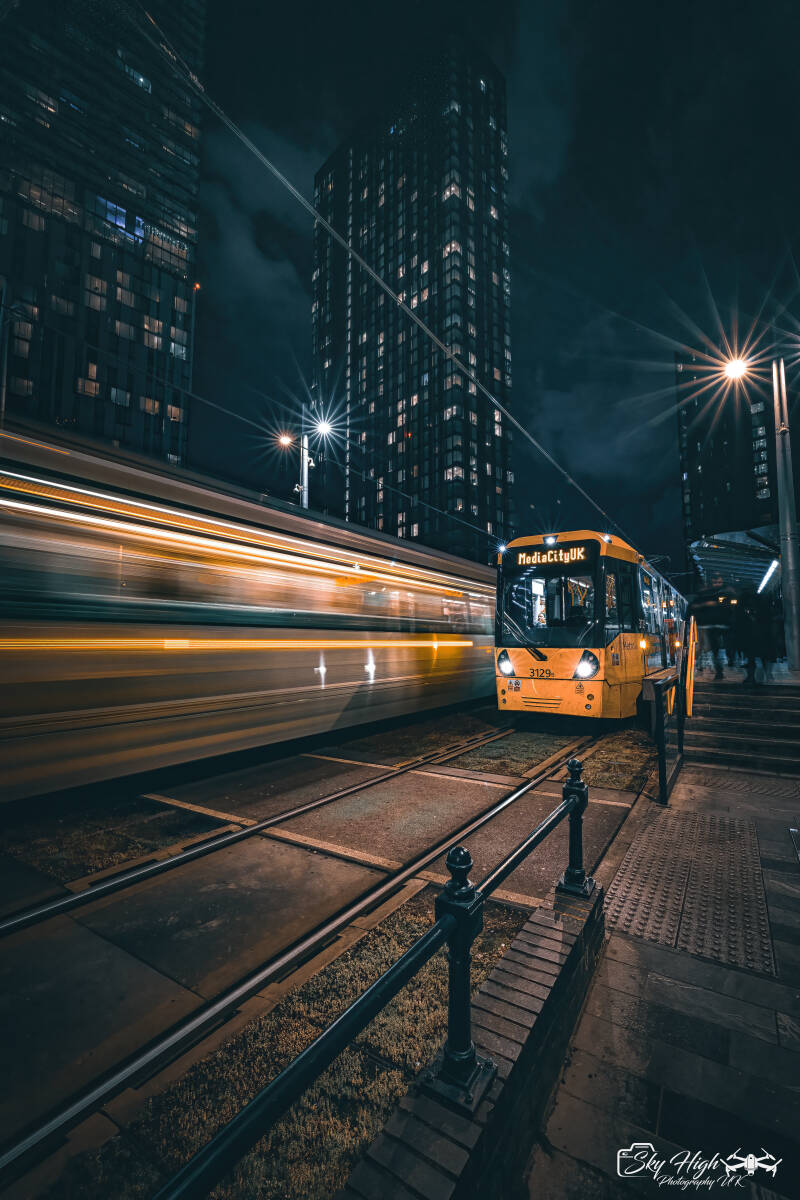
The square combines historic architecture with modern Manchester, and the Metrolink trams provide an additional element that can be incorporated into your compositions.
The area works particularly well around blue hour and after dark, when the surrounding buildings are illuminated and the movement of the trams can add interest to your photographs.
It’s also a useful location for practising composition because there are several different viewpoints within a relatively small area.
Photography tip: Look beyond the obvious wide-angle view. Try using buildings, tram lines and architectural details to create stronger compositions.
Manchester Central
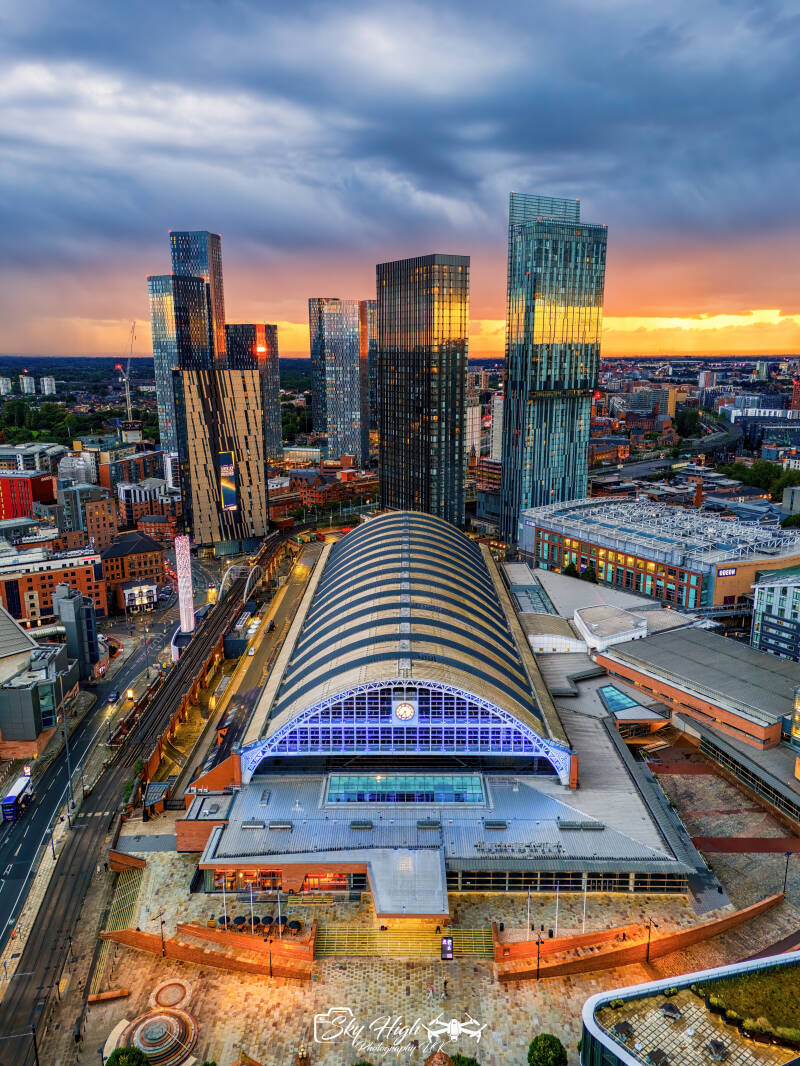
Manchester Central, formerly GMEX, provides some fantastic opportunities for architectural and urban photography.
The distinctive historic structure contrasts with the modern buildings surrounding it, giving you the opportunity to combine old and new Manchester within the same photograph.
The area around Manchester Central also works well as part of a wider city-centre photography walk, particularly when combined with nearby locations such as St Peter’s Square and Castlefield.
Manchester’s Canals
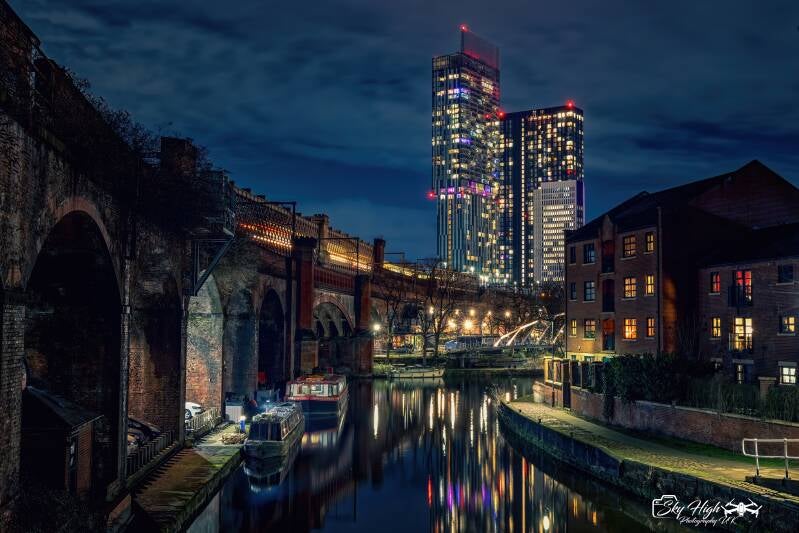
Manchester’s canals offer some of the city’s best opportunities for reflections and leading lines.
Water can completely change the appearance of a scene, particularly when the city lights begin to appear after sunset. Look for reflections of buildings, bridges and lights in the canal and experiment with different focal lengths.
Don’t be afraid to slow down and look carefully at the edges of the canal. Some of the strongest compositions can be found away from the obvious viewpoints.
Photography tip: A tripod can be extremely useful for evening photography, particularly when you’re working with slower shutter speeds.
Manchester Skyline
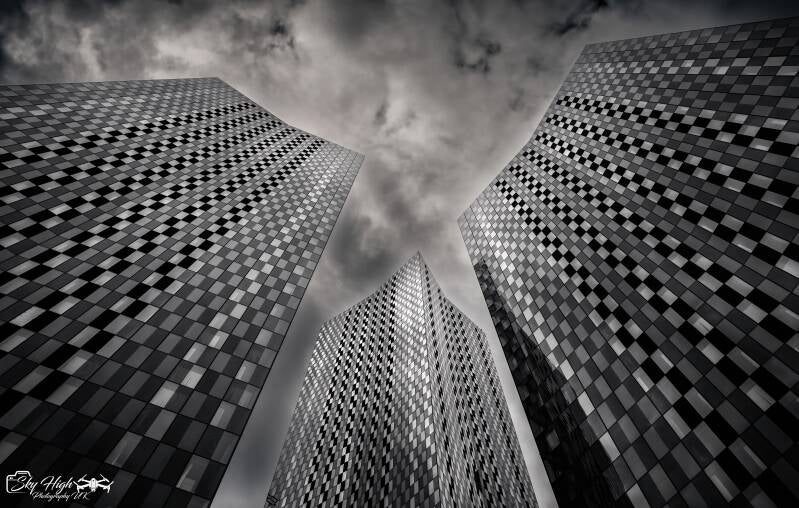
Manchester’s rapidly changing skyline provides plenty of opportunities for cityscape photography.
Modern skyscrapers sit alongside historic buildings, creating interesting contrasts and layers within the city.
When photographing the skyline, consider the direction of the light and the weather conditions. Clouds can add considerably more atmosphere than a completely clear sky.
Try different focal lengths rather than relying solely on a wide-angle lens. A longer focal length can help isolate sections of the skyline and create more compressed compositions.
Manchester Night Photography
Manchester becomes a completely different photographic environment after dark.
Street lights, illuminated buildings, trams, traffic and reflections all provide opportunities to experiment with longer exposures and creative compositions.
Night photography is also a great way to learn more about your camera because you’ll need to take greater control over settings such as aperture, shutter speed and ISO.
If you’re new to photographing at night, don’t simply increase your ISO and hope for the best. Take your time, use a tripod where appropriate and experiment with different shutter speeds.
If you’d like to learn night photography with hands-on tuition, take a look at my Manchester Night Photography Workshop, a private 1-to-1 photography experience tailored to your experience and photography goals.
When Is the Best Time to Photograph Manchester?
There isn’t one single best time — it depends on the type of photograph you’re trying to create.
Golden hour can provide warm light across the city’s architecture.
Blue hour is particularly useful for cityscape photography because the sky retains colour while buildings and street lights begin to illuminate.
After dark is ideal for light trails, illuminated architecture, trams and long-exposure photography.
Weather can also make a huge difference. Clouds can add texture and atmosphere to the sky, while wet conditions can create reflections across streets and pavements.
Photography Tips for Manchester
Whatever location you’re photographing, there are a few simple things I recommend:
- Take your time to find the composition rather than immediately taking a photograph.
- Look for leading lines created by canals, roads, bridges and tram tracks.
- Try photographing the same location at different times of day.
- Use reflections whenever you find suitable water or wet surfaces.
- Experiment with different focal lengths.
- Don’t rely entirely on automatic settings.
- For night photography, a tripod can give you much more control.
- Check the weather and light before heading out.
- Most importantly, experiment and enjoy the process.
Learn Manchester Photography With Hands-On Tuition
Exploring Manchester with a camera is one of the best ways to improve your photography because the city gives you so many different subjects and conditions.
If you’d like to improve your camera skills while photographing some of Manchester’s best locations, I offer practical Manchester photography workshops with hands-on tuition.
Workshops are available as private 1-to-1 sessions and small-group experiences, depending on the type of workshop you’re looking for.
You can learn more about my Manchester Photography Workshops, including full-day, half-day, night photography and small-group options.
Final Thoughts
Manchester offers an enormous amount of variety for photographers. From the canals and historic architecture of Castlefield to the modern city skyline, there are opportunities for photography throughout the city and at every time of day.
The key is to explore, experiment and return to locations in different conditions. A place that looks ordinary in the middle of the afternoon can become a completely different photograph at blue hour or after dark.
These are some of my favourite areas to photograph, but Manchester is full of smaller compositions waiting to be discovered.
Grab your camera, explore the city and see what you can create.